Showing posts with label europe. Show all posts

Friday, May 19, 2017

Normative Dimensions of the European Crisis

European Journal of Political Theory
Special Issue: Normative Dimensions of the European Crisis
April 16, 2017

Miriam Ronzoni - University of Manchester
Juri Viehoff - University of Zurich
Introduction: Normative Dimensions of the European Crisis

The project of European integration is arguably currently facing its deepest crisis since its inception. In less than 10 years, what looked like a steady process of political enlargement, institutional consolidation, and economic convergence has come to a halt (or has even shown signs of backsliding). The project is now threatened in its very existence. This is true both for the Eurozone and for the European Union (EU) more generally.

The global financial crisis has exposed the vulnerability of the Eurozone governance structure to exogenous shocks, and highlighted the problem posed by deep economic discrepancies between member states. The crisis has brought into focus the profound and often adverse consequences that current forms of economic and financial integration have for the adequate functioning of both domestic and supranational institutions. Responding to these difficulties, some significant changes have been made to the Eurozone’s mechanisms – initially in the form of conditional lending to indebted Eurozone member states, and subsequently through the establishment of the European Stability Mechanism, the incorporation of evermore stringent rules regarding national debt levels and deficits, and the implementation of debt-brakes through the Fiscal Compact. The Eurozone, however, continues to struggle to find the right balance between further integration on the one hand and protection of the diversity of welfare state arrangements and democratic institutions of individual states on the other.

Moreover, new institutions and practices (including, centrally, austerity programs) have been met with profound popular resistance especially in adversely affected countries. This has led to a grave legitimacy crises of Europe’s now fragile-seeming supranational institutions. Some scholars have suggested that this crisis calls for a further push towards supranational integration which, crucially, must replace austerity and debtor-punishment with genuinely democratic procedures and substantive economic solidarity in the form of an EU-wide redistributive mechanism (Habermas, 2015: 550). Other theorists have argued, to the contrary, that the Euro-system in particular, and the EU’s pro-market economic governance more generally, have failed member states, and that we should therefore revert to a ‘Europe of States’ in order to safeguard (or indeed rescue) both national democracy and national welfare systems (Scharpf, 2015: 394; Streeck, 2014: 272). By and large, however, the Euro-crisis, its institutional responses so far, and the political contestation it has encountered have remained relatively under-theorised by political philosophers – especially when compared to the detailed recent treatments by economists (see e.g. Krugman, 2012Sandbu, 2015Stiglitz, 2016).

To make matters worse, the whole EU, over and above the Eurozone, faces a deep legitimacy crisis. On the 23rd of June 2016, the United Kingdom voted in favour of leaving the EU. And as this special issue goes into print, Prime Minster Theresa May is pushing ahead to trigger Article 50 of the EU Treaty, formally giving notice that the UK will in fact exit the EU. Beyond its practical impact on the EU and the UK, ‘Brexit’ has great symbolic significance both in virtue of its modality (a popular referendum, thus symbolising the public rejection of what is largely perceived to be a technocratic, elitist, and undemocratic institution) and because the United Kingdom was already perceived as the EU member enjoying the highest level of autonomy within the Union. Brexit will be a first, and a first whose modalities and ripple-on effects are all but clear. Questioning EU memberships and the very existence of the EU has, moreover, ceased to be a taboo in many other countries, including several founding members like Italy, the Netherlands, and France. The role of policies of austerity, as well as the vitriolic popular debates that have split Europeans into ‘Northern-creditors’ and ‘Southern-debtors’, can hardly be overstated as we seek to understand this larger phenomenon of disaffection with European integration.

The aim of this special issue is to offer a range of perspectives and normative assessments of these recent events and to initiate further research into the fundamental issues raised by recent developments in European economic and financial integration. Specifically, the different articles investigate whether – and if so how – the economic and financial calamities, and the ensuing political crisis, demand a fundamental reassessment of the degree to which supranational arrangements of the kind we find amongst EU(-rozone) member states are (i) compatible with the advancement of social justice and democratic legitimacy within states and (ii) can realistically be designed so as to guarantee free and fair interaction amongst self-determining political communities.
Whilst building on the wealth of existing EU scholarship, the articles assembled here especially advance the existing debate along three dimensions:

First, they are all attentive to the quite profound changes that the Euro-crisis has brought to the project of European integration: Such changes have manifested themselves not merely in rapid institutional reforms in response to the crisis (e.g. massive extension of the mandate of the European Central Bank, highly intrusive prescriptions regarding the permissible level of debt and welfare provisions in Southern states, etc.), but also in dramatic shifts in public perception of the point and purpose of European institutions in more crisis-prone states.

Second, these articles seek to relate the existing normative EU literature both to wider theoretical discussions that have exercised political theorists in recent years (most notably to flourishing debates in international political theory and global justice) and to new conceptual tools that these discussions have made available (such as the practice-dependence approach as a method for assessing the normative performance of an institution; or the concept of demoi-cracy as an normative ideal for supranational institutions that is a genuine alternative to both intergovernmentalism and federalism).
Third, and related, they advance the existing debate by assessing the most pressing moral questions not merely in terms of the prevailing conceptual notions used in EU scholarship, many of which focus on questions of democratic procedure (viz. ‘democratic deficit’). Whilst questions of supranational democratic procedure must continue to play a prominent role in our normative assessment of European institutions, there is also room for assessing these institutions in light of other values, most obviously those bearing on political and distributive justice within and between states. These articles are therefore meant to update, advance, and enrich the existing political theory of European integration.

Andrea Sangiovanni and Juri Viehoff address the second and especially the third dimension, by exploring the compatibility of specific policies with relevant ideals of social justice, distributive fairness, and solidarity at the European level. But along the way, they also put forward arguments that are relevant to the first dimension, providing reasons in favour or against institutional proposals currently under discussion. Sangiovanni discusses, and rejects, the permissibility of in-work benefits, the welfare reform which David Cameron negotiated with the EU in the Winter of 2015/2016 in the hope of convincing the United Kingdom to remain in the EU after all. To make his case, Sangiovanni surveys and applies recent philosophical theories of discrimination, and marshals his own account as a justice-based objection to illegitimate differentiations between EU workers. Viehoff defends the idea of a European social minimum (a largely unconditional welfare contribution paid to each EU-citizen) as the object of a possible consensus among different relevant normative perspectives – i.e. as something which European federalists and intergovernmentalists, internationalists, and cosmopolitans about justice could all agree to. Stressing the particular urgency of such a proposal in the face of monetary integration, his case relies at least in part on recent Eurozone developments.

Inspired by recent applications of neo-republican thinking to questions beyond the state, Richard Bellamy takes by the horns fundamental questions about the EU’s institutional structure, asking in particular which model of sovereignty the EU should embody. The EU is often characterised as having challenged the sovereignty of the member states in ways that are both necessary and desirable. Bellamy disputes both these arguments, by defending state sovereignty as both functionally necessary and normatively desirable if citizens are to be able to reason publicly about issues of common concern, and to resolve their reasonable disagreements in a free and equal manner.

Finally, Francis Cheneval, Kalypso Nicolaïdis, and Miriam Ronzoni discuss the merits of the recently developed idea of demoi-cracy, according to which the EU does and should constitute an alternative to both federalist and intergovernmental institutional model. Drawing on the value of non-domination between heavily interdependent democratic states, Ronzoni offers a sympathetic reading of the normative ideal of demoicracy, but then introduces the distinction between institutional and normative ideals to raise doubts about whether demoicracy can be a distinctive institutional third way. In the final contribution to this issue, Nicolaïdis and Cheneval seek to move the recent scholarship on demoicratic theory a step further by exploring what they refer to as the social construction of the demoicratic reality. In so doing, they propose a conceptual framework for understanding how popular sovereignty could possibly be exercised concurrently by several rather than just one demos.


The Future of Western Democracies

Institute of European Studies, UC Berkeley

Ralf FuecksPresident, Heinrich-Böll-Stiftung

May 3, 2017


Wednesday, September 16, 2015

The European Crisis

Michael Walzer, Dissent Magazine
September 11, 2015

The crisis in Europe today is felt most dramatically and most painfully by tens of thousands of refugees. They are indeed in critical need of help, and many of them will die if their needs are not recognized and met. But this is also a crisis for the people of Europe, for they are the ones, right now, who must recognize and meet those needs, and if they fail to do that, the idea of Europe will die. The dream of a new kind of commonwealth, a commonwealth of mutual responsibility and liberal values, will be over; we will wake up to a grim day.
In 1938, in an earlier European crisis, with refugees clamoring to enter France, Leon Blum, the leader of the Socialist Party and the prime minister of the short-lived Popular Front government of 1936, gave a speech whose key sentences are worth repeating today. This is what he said:
Your house may already be full. That may be. But when they knock on your door, you will open it, and you will not ask them for their birth certificates or criminal records or vaccination certificates.
What a joy it would be to hear a Socialist leader in Europe today speak like that! François Hollande came close: “It is the duty of France, where the right to asylum is an integral part of its soul, its flesh. . . .” But he then announced that France would admit 24,000 refugees over the next two years—too few, given the numbers knocking on the door.
Blum in ’38 went on to say that the refugees would not necessarily stay in France. A more general solution to the crisis was required, as it is today, permitting the return of people to their homelands or their resettlement in different countries, which would share the burden of providing for them. But they needed a place, they need a place, right now: “How can you refuse them shelter for a night?” Blum asked. In Europe today, only the Germans and the Swedes have opted strongly against refusal; Italy and Greece are overwhelmed and eager to help the refugees on their way to other places. The EU as a whole is once again, as Europe was in the 1930s, a world of borders and refusals.
Faced with the desperate plight of the migrants, the countries of Europe (and other countries, too—I’ll come to them) face a clear choice: they can help stem the tide, by confronting the poverty, civil wars, and predatory governments that produce it, or they can take people in for the night and for many nights. I guess it isn’t actually a choice; some version of both is morally and politically necessary. Let me say something, very briefly, about each of them, starting with the second.
The immense task of providing shelter for a night has fallen on countries like Jordan, Lebanon, and Turkey, where several million refugees are now housed or tented in camps with inadequate, most often radically inadequate, shelter, sanitation, and health services. Even for this, the costs are enormous, and richer countries, most of whom don’t want to see these people at their borders, have nonetheless failed to help them, or to help them enough, where they are. Men, women, and children are fleeing the camps, on a very dangerous journey to those European borders, which are mostly closed to legal crossings. Illegal crossings are now a big business, which, like other businesses in our neoliberal world, produce many casualties. Stories of injury and death at the hands of traffickers have become commonplace, and they move us, though not very much. But the people won’t stop coming, so the crossings must be made legal and help provided on a scale that matches the wealth of the providers. Your house may be full. It doesn’t matter.
European leaders, led by Germany’s Merkel, have talked about dividing the burden by assigning quotas to each member state of the EU: so many refugees for you, so many for you. The numbers discussed have been too small, but as of this writing, no assignments have been made or accepted. Iceland has done better.
And what about the United States, where Liberty lifts its torch to welcome the huddled masses? There isn’t much of a welcome these days. We have taken in very few of the refugees from Iraq, very few even of the people who cooperated with U.S. occupation and whose lives were therefore in danger, and even fewer from Syria.* Our politicians are vying with each other in their enthusiasm for keeping out Mexicans, so why would they open the door to people from so far away? We should be assisting Europe or, better, embarrassing Europe, by taking in significant numbers of people—especially from parts of the world that we have helped to ruin. It should be easier for us, an immigrant society, than for the Europeans who persist in thinking of themselves, against a lot of evidence, as a land of anciently rooted and entirely homogeneous populations.
In a recent New York Times op-ed, Ross Douthat counseled prudence: advocates of opening the door are “blind to the realities of culture, the challenges of assimilation, and the danger and inevitability of backlash.” He is right, of course, about the realities, the challenges, and the danger, but what follows from being right? In the 1840s, the United States took in tens of thousands of Irish Catholic peasants fleeing the potato famine—immigrants who, our nativists insisted, would never learn the virtues of democratic citizenship (only Protestants could do that). And, yes, we got the backlash of the Know-Nothing Party, which was briefly a majority party in parts of the northeast. But sometimes dangers have to be met, not avoided.
What about other countries, where the dangers might be less threatening than in Europe? India and China seem sufficiently crowded, but Australia, New Zealand, Canada, Brazil, Argentina—surely these countries have room for some number of desperate people. The countries most responsible for the Syrian disaster—Iran, Russia, and Saudi Arabia—have taken in none at all of its victims; they should be welcoming Syrians by the thousands. Indeed, in all of these countries, and ours too, an influx of immigrants would, over time, strengthen the economy and enhance the culture. And, not to worry, if there is ever peace in their homelands, many of the refugees will go home.
Is there any way of bringing peace to their homelands, or of reducing poverty, or of replacing predatory rulers? Besides taking people in, we have a responsibility to help them where they are. Not having helped them where they are, and sometimes having hurt them, Europeans and Americans, and others too, must take them in. But, still, it would be a good thing to change the conditions that drive so many into exile. People don’t leave their homes willingly; it takes a disaster to produce large numbers of refugees, looking for a better place or just a place to rest for a while. A serious, sustained policy of investment, substantially funded but carefully and locally focused, could begin to reduce poverty in, say, the countries of sub-Saharan Africa. But politics is probably a more common cause of disasters than economics is, and wars, warlords, and tyrants require a more forceful intervention. We are rightly leery of anything like that. Overthrow a tyrant, like Qaddafi, say, and you get a chaos of thugs and zealots—and then thousands of people fleeing. What ought to be done?
I have a utopian solution, which is also politically incorrect. There are countries in the world today that ought to be, for a time, not-independent and not-sovereign. What the world needs, and what the UN might provide if it were the organization it was meant to be: a new trusteeship system for countries that are temporarily unable to govern themselves. The old mandate system of the League of Nations was not a great success, but it did not produce, and perhaps it prevented, disasters like the ones we are helplessly watching today. For the last decade and a half, Kosovo has been a kind of NATO trust—again, not a glorious example, for refugees are still fleeing, but at least the killing has stopped. So perhaps it isn’t crazy to suggest that Libya and Syria ought to be UN trusteeships, with some coalition of countries, different in each case, taking responsibility for maintaining law and order and providing basic services to the population—under strict UN supervision. I hesitate to suggest the countries that might serve as trustees, since I wouldn’t want to vouch for any country’s trustworthiness. But great virtue isn’t necessary, only a readiness to stop the killing, get rid of the killers, and provide enough stability for the citizens of the war-ravaged countries to begin rebuilding. That has to be their work.
...
Full-text available at:

Wednesday, January 21, 2015

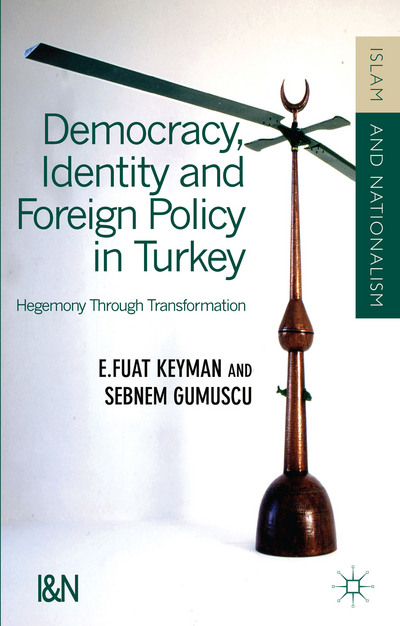
Democracy, Identity and Foreign Policy in Turkey

Democracy, Identity and Foreign Policy in Turkey


E.Fuat Keyman, Sabancı University
Şebnem Gümüşçü, Middlebury College 

Palgrave Macmillan, 2014


The recent history of Turkey is dominated by the country's transformation into a modern democracy. Over the past few years Turkey has been increasingly recognised as a nation of economic, political and cultural significance as well as being a vital political connection between Europe and the Middle East. In this compelling volume, Professor Keyman and Dr. Gumüsçu put democratisation in Turkey under the microscope with an especial focus on recent transformations under the Justice and Development Party (AKP). Accordingly, it explores to what extent Turkey's transformation under the AKP has led to democratic consolidation as well as asking if there is a disconnect between economic, cultural, and urban transformation, on the one hand, and democratic consolidation on the other? Furthermore, this book also takes the opportunity to explore several issues that have a direct effect on the consolidation of Turkish democracy such as globalization, foreign policy activism, the kurdish question, religious governance and civil society. By critically analyzing the dialectic between domestic transformations and global/regional dynamics, the book also discusses the ways in which Turkish transformation is affected by the Arab uprisings as well as how Turkey may inspire these countries.


Table of Contents

1. Introduction

2. Turkey's Transformation


3. Constructing Hegemony: the AKP Rule


4. AKP's Hegemony and Democratic Consolidation


5. Turkey's Proactive Foreign Policy under the AKP


6. Turkish Foreign Policy in the aftermath of the Arab Uprisings


7. The AKP, Arab Uprisings and the Kurdish Question


8. Secularism, Democracy and Identity


9. Civil Society and Democratic Consolidation


10. Conclusion: Turkey at the Crossroads: Democratization through the Strong EU Anchor


Monday, August 11, 2014

International Orders in the Early Modern World

International Orders in the Early Modern World

Before the Rise of the West

Edited by Shogo SuzukiYongjin ZhangJoel Quirk

Routledge – 2014 – 20 pages

This book examines the historical interactions of the West and non-Western world, and investigates whether or not the exclusive adoption of Western-oriented ‘international norms’ is the prerequisite for the construction of international order.
This book sets out to challenge the Eurocentric foundations of modern International Relations scholarship by examining international relations in the early modern era, when European primacy had yet to develop in many parts of the globe. Through a series of regional case studies on East Asia, the Middle East, Africa and Latin America, and Russia written by leading specialists of their field, this book explores patterns of cross-cultural exchange and civilizational encounters, placing particular emphasis upon historical contexts. The chapters of this book document and analyse a series of regional international orders that were primarily defined by local interests, agendas and institutions, with European interlopers often playing a secondary role. These perspectives emphasize the central role of non-European agency in shaping global history, and stand in stark contrast to conventional narratives revolving around the ‘Rise of the West’, which tend to be based upon a stylized contrast between a dynamic ‘West’ and a passive and static ‘East’.
Focusing on a crucial period of global history that has been neglected in the field of International Relations, International Orders in the Early Modern World will be interest to students and scholars of international relations, international relations theory, international history, early modern history and sociology.
REVIEWS
"An outstanding volume of non-Eurocentric historical-sociological essays that advances an extremely powerful critique of the English School’s commitment to what I call the ‘Eurocentric big bang theory of world politics’ – that the big bang of modernity exploded autonomously within Europe and that thereafter European ‘civilization’ expanded outwards in a non-problematic way to remake the world in its own image – by deploying the antidote of bringing Eastern agency back into the story of the long-term development of world politics." - John M. Hobson, Professor of Politics and International Relations, University of Sheffield, UK.
"Perhaps ‘1648 and all that’ fundamentally distorts our understanding of the history of international relations. By rediscovering early modern and non-western international orders, this expert team sets out a challenge to IR scholarship. It is especially welcome and important in making sense of the profound changes currently underway." - Ian Clark, E. H. Carr Professor of International Politics, Aberystwyth University
"Maps centered on the South Pole are amusing, but international relations books centered on the non-Western world are essential. From its origins, international relations theory has been a Western enterprise with other parts of the world largely ignored or analyzed through parochial and often inappropriate conceptions. Suzuki, Zhang, Quirk and their collaborators turn the tables and offer perspectives on Europe from East Asia, the Middle East, Africa and Latin America, and generally at a time when European interlopers were unable to impose their preferences on these cultures. They effectively demonstrate the importance of non-Western cultures and their ideas in shaping global history." - Richard Ned Lebow, Professor of International Political Theory, King's College London, UK
CONTENTS
Introduction Shogo Suzuki, Yongjin Zhang and Joel Quirk 1. Europeans and the Steppe: Russian lands under the Mongol Rule Iver B. Neumann 2. Europe, Islam and Pax Ottomana, 1453-1774 Ayla Göl 3. Curious and Exotic Encounters: Europeans as Supplicants in the Chinese Imperium, 1513-1793 Yongjin Zhang 4. Europe at the Periphery of the Japanese World Order Shogo Suzuki 5. A Corrupt International Society: How Britain Was Duped into its First Indian Conquest Darshan Vigneswaran 6. International Relations in the Americas during the Long Eighteenth Century, 1663-1820 Charles Jones 7. Europeans, Africans and the Atlantic World, c1450-1850 Joel Quirk and David Richardson Conclusion: Eurocentrism, World History, Meta-narratives and the meeting of international societies Richard Little
AUTHORS
Shogo Suzuki is Senior Lecturer in the Department of Politics at University of Manchester, UK.
Yongjin Zhang is Professor of International Politics at Bristol University, UK.
Joel Quirk is Senior Lecturer in the Department of Political Studies at the University of the Witwatersrand, South Africa.


Friday, November 15, 2013

Muslims in Liberal Democracies: Why the West Fears Islam

Jocelyne Cesari, Harvard University
Qantara.deNovember 2013

Harvard professor and Islam expert Jocelyne Cesari looks into the mechanisms of the West's fear of Islam, and ponders on how the dominant narrative that tends to present Islam as an alien religion can be countered

The integration of Muslim immigrants has been on the political agenda of European democracies for several decades. However, only in the last ten years has it specifically evolved into a question of civic integration closely related to religious identity. In the 1960s and 1970s, the socio-economic integration of immigrants with a Muslim background was the primary focus of academic literature, but with the emergence of the second and third generations, the interest has shifted to political mobilization. Beginning with the Rushdie affair in the United Kingdom and the hijab affair in France from 1989 to present, the spotlight has moved to the legitimacy of Islamic signs in public space, such as dress code, minarets, and halal foods.

As a consequence, controversies surrounding the visibility of these signs have steadily grown. Controversy is not merely a disagreement about divergent points of view; but it is about fundamental differences (or at least perceived as such) about the principles and norms that regulate the common life of individuals sharing the same time period. Such fundamental divergences that lead to exclusive or binary positions cannot coexist in the same public space.

Islam and the perceived rejection of democracy
Consequently, headscarves, mosques, and minarets are increasingly seen as a rejection of western democratic values, or even worse, as a direct threat to the West.


During the 2006 campaign to ban minarets in Switzerland, posters from the Egerkinger Committee displayed a woman in a burqa standing next to minarets that were rising from a Swiss flag and pointing to the sky like missiles (see picture). Such a perception of Islam in the public sphere has reached the United States as well through the ongoing Shari'a debates, discourse on Islamic radicalization in jails, and the ground zero mosque controversy in the summer of 2010.

Islamic signs are not only ostracized in public discourse, but are also controlled and restricted through multiple legal and administrative procedures in an attempt to "civilize" or adjust the signs to fit western political cultures. In April 2011, the French government enforced the ban on wearing the niqab or burqa, which was overwhelmingly approved in 2010 by the French legislature. Other countries like Belgium and The Netherlands have followed the French path in 2011 and 2012.

The most recent addition to the long list of outcast Islamic signs is circumcision. In June 2012, a judge in Cologne, Germany, outlawed circumcision on the grounds that it causes "illegal bodily harm". Although Germany's Chancellor Merkel has promised the Muslim and Jewish communities that they can continue practicing circumcision, the legal implications of this ban have yet to be determined.

Cultural struggle within Islam
This cultural struggle is also fought on the Muslim side. Salafism, a specific interpretation of Islam in stark opposition to western values and cultures, advocates many practices such as gender segregation and rejection of political and civic engagement that are deemed as efforts to fight the impurity of the West. This particular brand of Islam is one of the most visible, widespread, and accessible interpretations, and thus gives the illusion to both Muslims and non-Muslims that Salafism is the true Islam.


In sum, an essentialized West and an essentialized Islam are fighting each other and in so doing reinforce one another. The "burqa versus the bikini" opposition often used by both Islamophobes and Muslim fundamentalists encapsulates this sense of profound incompatibility that relates to politics, lifestyles, and most interestingly, women's bodies.

On one hand, for most westerners, the burqa symbolizes total denial of freedom and of gender equality. On the other hand, for fundamentalist religious voices, the burqa symbolizes woman's dignity and her devotion to family values, opposed to the bikini seen as an objectification and degradation of the female body.

Such stark oppositions are of course extreme, but at the same time, reflect the "either or" approach, in which most of the discourse on Islam is currently trapped. The German President, Joachim Gauck involuntarily illustrated the milder version of this binary opposition, when he said that Muslims can live in Germany but that, unlike his predecessor (Christian Wulf), he does not think that Muslims can be part of Germany.

Polarized mindset
One major consequence of such a polarized mindset is to mask the sociological reality of Muslims. In fact, a striking gap exists between the image of Islam as it is constructed in binary public discourse and the multifaceted reality of Muslims across countries and localities.


For example, the dominant assumption is that visible Islamic identities in the West are inversely correlated to their civic and political loyalties, while there is empirical evidence that contradicts such an assumption.

My book – "Why the West Fears Islam – An Exploration of Muslims in Liberal Democracies" – presents first-hand data from focus groups I organized in Paris, London, Berlin, Amsterdam, and Boston between 2007 and 2010. In this regard, it is the first systematic and comparative review of the existing knowledge about Muslim political behaviours and religious practices in western Europe and in the United States.

The major conclusion is that although Muslims are challenged by their secular environment, they do not experience the incompatibility so intensely debated by western politicians and Salafi preachers alike. Then why is Islam depicted as an obstacle in political discourse and the media? Taking up this intriguing gap, I have attempted to make sense of this disjuncture between what Muslims do and the political construct of the "Muslim problem".

During this exploration, liberalism and secularism have appeared as the two major idioms used to make sense of the Muslim presence.

1. Contextualizing Liberalism
The "Islamic Problem" in Europe is a consequence of immigrant settlement that in the last two decades has been phrased in cultural and religious terms. The fact that Muslims stand at the core of three major social "problems" – immigration; class and economic integration; ethnicity and multiculturalism – has increased the concern about Islamic religion, increasingly seen as the major reason for all problems.

I show in my book that in the United States this culturalization of all political issues related to Muslims is more recent and primarily related to security concerns. Therefore, categories of "immigrant" and "Muslim" overlap in Western Europe, unlike in the United States where immigration debates centre on economic and social concerns such as wages, assimilation, and language.

The outcome of these social shifts is visible in the apocalyptic turn of the public rhetoric on Islam in Europe. Extreme right political figures like Geert Wilders speak of "the lights going out over Europe" or of "the sheer survival of the West".


It would be misleading to think that this existential war is waged only on the margins of European societies. In fact, numerous opinions surveys as well as political discourses show that the perception of Islam as a danger to Western core political values is shared across political allegiances and nations.

2. The Alliance of Liberalism and Feminism
In fact, this existential war can be defined as a values-centred liberalism which pitches itself against the recognition of religious and cultural diversity. For example, British Prime Minister David Cameron declared in February 2011 at the annual Munich Security Conference of world leaders: "Frankly, we need a lot less of the passive tolerance of recent years and much more active, muscular liberalism."

It is important to emphasize that, historically, political liberalism at the foundation of Western democracies is not necessarily incompatible with the recognition of pluralism. Based on the principle of toleration, the liberal State is traditionally expected to grant equality to citizens of all religious and cultural backgrounds.

In contrast, the new liberal discourse sees recognition of minority rights as a threat to freedom of expression and women's rights which are apprehended as the core values of national communities. Hence, it advocates a strong cultural integration of newcomers. As a consequence it has created very significant policy shifts in countries usually characterized by multiculturalism like the Netherlands or the United Kingdom. For example, the multicultural project of recognition of "cultural diversity in a context of mutual tolerance" of Labour Home Secretary Roy Jenkins in 1966 is now strongly criticized. In fact, the new political consensus is to prioritize strong cultural assimilation to British values over minority rights.

The markers of European identity
This "new integrationist" discourse is widely shared across European countries and, interestingly, promoted by former left-wing activists. Gender equality and rejection of religious authority, which were primary left-wing topics of struggle in the 1960s have become in the present decade the legitimate markers of European identity. In these conditions, all groups and individuals are required to demonstrate conformity to these liberal values in order to become legitimate members of national communities. The "Moderate Muslims" label serves this purpose. It creates a distinction that is supposedly not based on Islam as such but on the adherence of Muslims to liberal values.


Strikingly, feminist groups have become key actors of this discourse. Some feminist figures have been particularly vehement against group rights and especially against any Islamic principles that could undermine gender equality. Curiously, this feminist discourse silences the Muslim women that it purports to defend. As a consequence, Muslim women are transformed into subalterns in a way that is similar to the colonial and postcolonial vision of the Muslim subject.

This new integrationist discourse goes hand in hand with states' active policies to transform the behaviours and identities of their Muslim citizens. For example, state-led production of Muslim subjects with the correct moral identity is reflected in various policies: values tests and oaths of allegiance for would-be migrants and citizens; recruitment of "moderate Muslims" as state-sponsored role models and community leaders; formal and informal restrictions of Islamic practices seen as extremist or illiberal.

All these policies can be summed up as an attempt to civilize the "enemy". Such a project is not only a speech act but translates into discreet or invisible regulations/ limitations on Muslim cultural and social practices. Interestingly, most Muslims we interviewed reveal that they are already "civilized" and are trying to find commonality with the dominant group. Most of the time, however, they are silenced or reduced to the reification of their bodies, dress, or minarets.

Being Muslim and a citizen
One of our most striking findings is the non-contentious nature of being a Muslim and a citizen, while it is this exact dichotomy that puts Muslims at odds with the social expectations of most Europeans. Our surveys show that Muslims do not see incompatibility between being a Muslim and being a citizen.
At the core of the European shift is the blind spot of the social legitimacy of religion that has been completely eliminated from most of national discourse and values.

In sum, the symbolic integration of Muslims within national communities would require a dramatic change in the current liberal and secularist narratives. It is a daunting task, but it can be done.

On March 10, 2011, the hearings of the Congress Commission on Radicalization of American Muslims provided a platform for at least two individuals to weave Muslims into the American narrative. In his testimony, Congressman Keith Ellison (D-MN), the first Muslim elected to Congress, tearfully etched into America's consciousness the story of Salman Ahmad, a Muslim paramedic and New York police cadet killed trying to help fellow New Yorkers on 9/11. Additionally, Congressman Brian Higgins, a Catholic, stated that America's tradition is "Christian-Judeo-Islamic," not simply "Christian-Judeo".

This can be seen as empty feel-good talk, but it can also be the prefiguration of how historical references can be used to achieve symbolic integration and counter the dominant narrative that tends to present Islam as an alien religion.

Jocelyne Cesari, Senior Research Fellow at the Berkley Center for Religion, Peace and World Affairs, Georgetown University, Director of the Islam in the West Program, Harvard University

Wednesday, July 17, 2013

Misunderstanding Cultures: Islam and the West

Kwame Anthony Appiah, Princeton University 

This paper aims to explain why the idea of the West is, for historical and philosophical reasons, an obstacle to dealing with the dangers posed by radical Islamists. Every proposed theory of the West has to account for the great internal cultural diversity both of European cultures and of those influenced by them around the world; and every serious historical account of both Europe and Islam has to recognize the long-standing, substantial, and ongoing interdependence of their intellectual and religious traditions. As a result, what is needed to face extremists, whether inside or outside Europe (and whether Christian, Moslem or neither) is not an opposition between Islam and the West, but an alliance of those of all faiths and none who can live with and tolerate cultural difference against those, wherever they live and whatever their religion, who cannot.[1]

I have given myself two tasks. One is the philosopher’s job of trying to get clear about some difficulties with the very idea of the West. The second is historical: it is to remind us of when the idea that West and Islam might be opposites began, because it turns out that history makes the philosophical task easier. So I am going to begin there.


For Herodotus, the world, like Caesar’s Gaul, was divided into three parts. To the east was Asia, to the south was a continent he called Libya, and the rest was Europe. But the ancients certainly knew that people and goods and ideas could travel between the continents with little hindrance. Indeed, Herodotus admitted to being puzzled as to “why three distinct women’s names have been given to what is really a single land-mass …”[2] Still, despite Herodotus’s puzzlement, these continents were for the Greeks and their Roman heirs the largest significant geographical divisions of the world. It took a further intellectual leap, however, to go from identifying continents to thinking of their inhabitants as a single people. It wouldn’t have occurred to Herodotus that he had something special in common with the inhabitants of Persia; something that united him with them in contrast to all the inhabitants of Europe. He was born 500 miles south of here at Halicarnasus—now Bodrum. But being born in Asia Minor didn’t make him an Asian; it left him a Greek. And the Celts, to the north, about whom he knew so little, were much stranger to him than the Persians or the Egyptians, about whom he knew rather a lot. You can have Europe, Africa and Asia without thinking of Europeans, Africans and Asians as kinds of people.

David Levering Lewis has claimed recently that it took two things to make Europeans begin to think of themselves, for the first time, at the end of the first millennium, as a people among peoples. One was the creation of a vast Holy Roman Empire by the six-foot-four-inch, thick-necked, fair-haired Frankish warrior king we know as Charlemagne. The other was the development, in the Iberian Peninsula on the Southwestern borders of his domain, of the Moslem culture of Spain, which the Arabs called al-Andalus. In making the various tribes of Europe into a single people, what they shared and what distinguished them from their Moslem neighbors were both important. 

Europeans are defined, like so many peoples, as much as anything by what they are not. This is, by now, a familiar idea. But Lewis offers a more startling proposal: in making the civilization that modern Europeans inherit, the cultural legacy of Al-Andalus is at least as important as the legacy of the Catholic Franks. In borrowing from their great Other, they filled out the European Self.

Charlemagne created his vast empire around the core of two Frankish kingdoms: Neustria—whose capital was Paris—in the west, and Austrasia in the east. He created monastic centers of learning, drawing scholars from across his empire and outside it. These cultural and political achievements perhaps entitled him to his self-conception as Rome’s heir in the West, author of an imperial restoration. When he traveled to Rome in December 800, some thirty years into his reign, he went to defend the authority of Leo III as Pope; and His Holiness returned the favor by crowning him Emperor of the Romans on Christmas Day 800 … much to the annoyance of the Empress Irene here in Constantinople, who called herself Emperor not Empress and thought the title was hers.

Like Charlemagne’s empire, al-Andalus was very much the product of a war-machine. Islam burst out of Arabia in the seventh century, spreading with astonishing rapidity in every direction. After the Prophet’s death in 632, the Arabs managed in a mere thirty years to defeat the two great empires to their north, Rome’s residue in Byzantium and the Persian empire that reached through central Asia as far as India. The Umayyad dynasty, which began in 661, pushed on west into North Africa and east into Central Asia. In early 711, Tariq Ibn-Ziyad led a Berber army across the straits of Gibraltar into Spain.[3] There he attacked the Visigoths who had ruled much of the Roman province of Hispania for two centuries. Within seven years, most of the Iberian Peninsula was under Moslem rule; not until 1492, nearly eight hundred years later, was the whole peninsula under Christian sovereignty again. 

The Umayyads did not, however, intend to stop at the Pyrenees. Their first attempt to take Aquitaine in the early eighth century were frustrated. A little more than a decade later, `Abd al-Rahman, the new emir of al-Andalus, returned to take up the task. He got as far north as Poitiers, almost half way from the Pyrenees to Paris. There, however, the Moslems met their match. In October 732, Charles Martel, who had force-marched his troops from the faraway Danube, joined Duke Odo in decimating the emir’s troops. In a Latin chronicle written in 754 by a Christian scribe, the victors at Poitiers are referred to as “Europenses”: it is the first recorded use of a Latin word for the people of Europe. And it was written (either in Cordoba or Toledo) in al-Andalus.

In retrospect, later Christian historians assigned to the Battle of Poitiers an epochal significance. Edward Gibbon, in his Decline and Fall of the Roman Empire, pointed out that if the Moors had covered again the distance they had traveled from Gibraltar, they could have reached Poland or the Scottish Highlands. Perhaps, Gibbon thought, if `Abd al-Rahman had won, “the interpretation of the Koran would now be taught in the schools of Oxford, and her pulpits might demonstrate to a circumcised people the sanctity and truth of the revelation of Mahomet.” For him, the fate of Christian Europe hung in the balance. After a week of battle, he wrote, “the Orientals were oppressed by the strength and stature of the Germans, who, with stout hearts and iron hands, asserted the civil and religious freedom of their posterity.”[4]

At the time, though, it would have seemed very strange to see Charles Martel’s victory as a triumph of religious freedom. The small but influential Jewish community in Iberia had been tolerated in Spain when their Visigothic overlords were still Arian heretics ruling Catholic and Jewish subjects; but Jews began to be persecuted in 589, when the Visigoths converted to Catholicism. For the Jews, then, the Moslem conquest, bringing rulers who largely practiced toleration of Jews—as well as Christians and Zoroastrians—in the large areas of the world now under their control, was not unwelcome. And during the first period of Moslem domination, Christians, too, discovered that they would have religious freedom, so long as they (like the Jews) did not seek to convert Moslems or criticize Islam. The contrast with the kingdom of the Franks, and, by the ninth century with the Frankish empire, could hardly have been more striking. The obsession of Catholic rulers with religious orthodoxy was one of the things that made the Dark Ages—as Petrarch was to dub the period from the fifth to the tenth centuries—so dark. 

The Great Cordoba Mosque is the most evident material embodiment of the civilization of the Arabs in Spain, but their intellectual achievements were even more astonishing. Starting in the time of `Abd al-Rahman the first, the Umayyad’s sought to compete with their Abbasid rivals in Baghdad for cultural bravura. Over the next few centuries, Cordoba alone acquired hundreds of mosques, thousands of palaces, scores of libraries. By the tenth century, those libraries had hundreds of thousands of manuscripts, while the largest libraries of Christian Europe could boast collections of only a few hundred.[5] The university of Cordoba predated Bologna, now called “the first European university,” by more than a century. And al-Andalus was a world of cities, not, like Europe, a world of country estates and small towns. By the end of the millennium, Cordoba’s population was ninety thousand, more than three times the size of any town in the territory once occupied by Charlemagne. In those cities, Jews, Christians and Moslems, Arabs, Berbers, Visigoths, Slavs and countless others created the kind of cultural goulash—a spicy mixture of a variety of distinct components—that generates a genuine cosmopolitanism. There were no recognized rabbis or Moslem scholars at the court of Charlemagne; in the cities of al-Andalus there were bishops and synagogues. Racemondo, Catholic bishop of Elvira, was Cordoba’s ambassador to Constantine VII in Constantinople and Otto I in Aachen. Hasdai ibn Shaprut, leader of Cordoba’s Jewish community in the middle of the tenth century, was not only a great medical scholar, he was the chairman of the Caliph’s medical council; and when the Emperor Constantine sent the Caliph a copy of the Discorides’ De Materia Medica, he took up ibn Shaprut’s suggestion to send for a Greek monk to help translate it into Arabic. The knowledge they acquired made Cordoba one of the great centers of medical knowledge of Europe. By the time of `Abd al-Rahman’s successor and namesake, `Abd al-Rahman III, in the tenth century, the emir of al-Andalus had the confidence to declare himself Caliph, successor or representative of the Prophet and, implicitly, leader of the Moslem World. Had the three religions not worked together, borrowing from the pagan traditions of Greece and Rome, what we call the West would have been utterly different. In an age where some claim a struggle between the heirs of Christendom and of the Caliphate is the defining conflict, it is good to be reminded of this long ago history of fruitful cohabitation.

This quick sketch of the history of relations among Europeans, Arabs and North Africans at the turn of the first millennium of the Common Era is a reminder of the messy interconnections between Islam and what we now call the West. One could explore, as well, the equally fascinating interweaving of European, North African and Middle Eastern histories that occurred as the imperial dreams of France and Britain met the fading power of the Ottoman Empire in the late eighteenth and nineteenth centuries. In each case, what we see is not the opposition of two distinct homogeneous civilizations, but conflicts within as well as between societies whose religious and intellectual lives had much in common; in part because of the interactions I have been sketching, which began a millennium earlier. I want now to turn to an attempt to explain why we so easily misunderstand this long history of sharing as well as conflict as the story of two great and utterly separate entities—the West and Islam—with distinct and irreconcilable essences. And to do that, I must sketch the story of how we came to think of modern Europeans and Americans as the real heirs to the classical civilizations of the Eastern Mediterranean. 

The academic curriculum of the nineteenth century traced civilization to roots in ancient Greece, following a history of progress from the excellent beginnings mapped out by the heirs of Homer. The culture of the West is a sort of golden nugget, dug from the earth of Hellas. Perhaps it traveled with Alexander. So it went to Egypt—the library at Alexandria was once its home. And the Macedonian emperor may have left some gold dust in Central Asia. You can see that in the sculpture of Gandhara. But the treasure was taken finally in triumph to Rome. There, of course, as everywhere on its travels it was embellished: for example, in the second century BCE by Terence, the greatest of the Roman comic dramatists, who was born in Carthage (now Tunis); and—at the turn of the fifth century CE, as the empire became Christian—by Augustine, Bishop of Hippo, born at Tagaste (now Souk Ahras in Algeria). In St. Augustine’s lifetime, the Visigoth’s took Rome; not long after he died, the Vandal’s captured Hippo.


...

Full-text available:

Related Posts with Thumbnails

Düşünce Kahvesi

Photography

Photography
dpchallenge.com

NYT: Travel and Cities

H-Net Academic Announcements - All